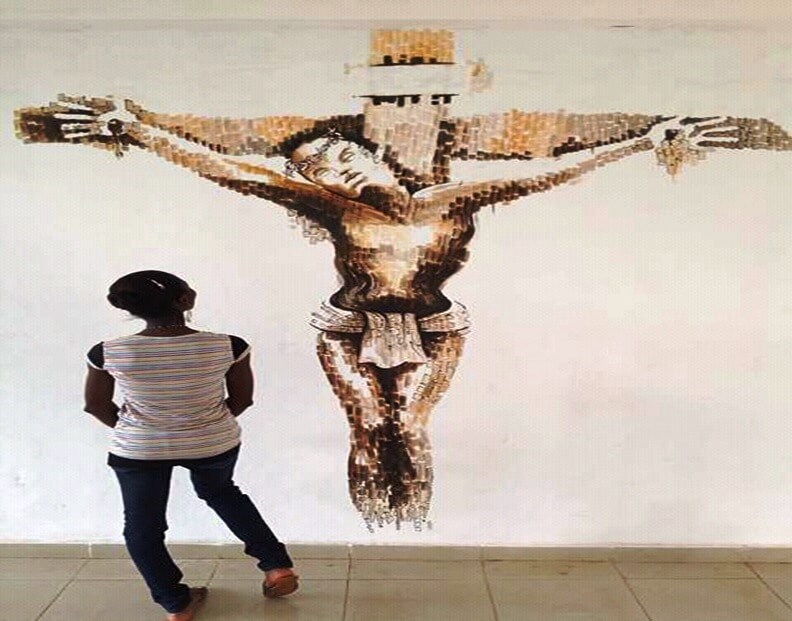
What are the ingredients in traditional Igbo culture that made Christianity easily acceptable when it was first introduced around the 1880s? A lot of factors may be adduced for this, but we cannot forget the story of Olaudah.
Around the year 1755, an 11 years old Igbo boy was kidnapped from his village, Isieke and sold into slavery. The boy, Olaudah Equaino according to Isichei (1976) in “A History of Igbo People” was “taken to the southern state of America, later sold to a planter in the West Indies”. Information available at National Museum of Colonial History Aba shows that Olaudah later bought his freedom at the cost of 45 pounds at the age of 19. The full impact of culture shock in his new environment was greatly minimized by his chance encounter with some American Jews. He was amazed at the striking similarities between Jewish and Igbo culture such as circumcision of every male 8 days after birth, dietary laws, separation of women during menstruation etc.
The similarities was so glaring that Olaudah hastily concluded that Igbo people are a lost Jewish tribe. Without the hindsight of the knowledge that modern Archaeology gave the world today, it did not cross his mind that the Jews may actually be a lost Igbo tribe. Olaudah was convinced that “God’s people” referred to in God’s covenant with His people in the book of Genesis 17:10-14 were actually Igbo people. Consequently he embraced Christianity and became a “fervent Christian”.
Olaudah documented his experiences in his autobiography; “The African”, (Interesting Narratives of Olaudah Equiano) published 1787. The book became a bestseller and according to Adiele Afikpo (1981) in “Ropes of Sand”, “it was of high demand for fifty years, and went into several editions in English and was translated into German and Dutch”. A abridged version of the book was later produced by Paul Edwards in London in 1967.
However, it wasn’t until 1841 that Christianity was introduced to Igbo land when according to schon and Crowther in Isichei (1976), “Simon Jones, an Igbo who had been sold into slavery, rescued and resettled in Sierra Leone, spent three weeks at Abor and preached to the children who flocked around him”. How did the mainstream Igbo accept Christianity? According to the report of the Church Missionary Intelligenceir, “in the early 1850s, a hundred Igbo petitioned the Bishop of Sierra Leone to establish missions in Igbo land”.
Some of them are freed slaves like Rev. Jones and Rev. Taylor. According to Isichei (1976), “in 1857 an Igbo, Rev Christopher Taylor established a Christian mission in Onitsha”. Like Olaudah, Igbo people readily embraced Christianity. Samuel Crowther and Christopher Taylor in their report in 1857-1859, “The gospel on the banks of the Niger”, later published (London, 1968) noted that “when individual missionaries visited towns in the interior, they were given an urbane and hospitable welcome (until the 1880s, they were men of African descent- Oyibo-oji, black Europeans, the Igbo called them- which reduced the extent of culture shock”.
Unfortunately, the culture shock was to manifest 30 years after. The Christian message then was presented to the people the way they could easily understand. This was the situation for almost 30 years until as Isichei (1976) reported, “in 1885, there was a change in the personnel of the mission. The Church Missionary Society for example was taken over by European evangelists with the help of colonial administrators”. When Nigeria came fully under colonial rule, according to Kalu Ogbu (1999), “missionary enterprise among the Igbo of southeast Nigeria blossomed in the years when the British moved into Igbo hinterland”.
European missionaries started building churches, schools and hospitals in many places in Igboland. While this was a good development, the people were surprised that pictures of major religious icons placed were actually images of Caucasians. The very fact that Christianity as introduced by European missionaries came into Igboland on “the same boat” with colonialism did not help matters. The implication was that many see Christianity as “white man’s” religion.
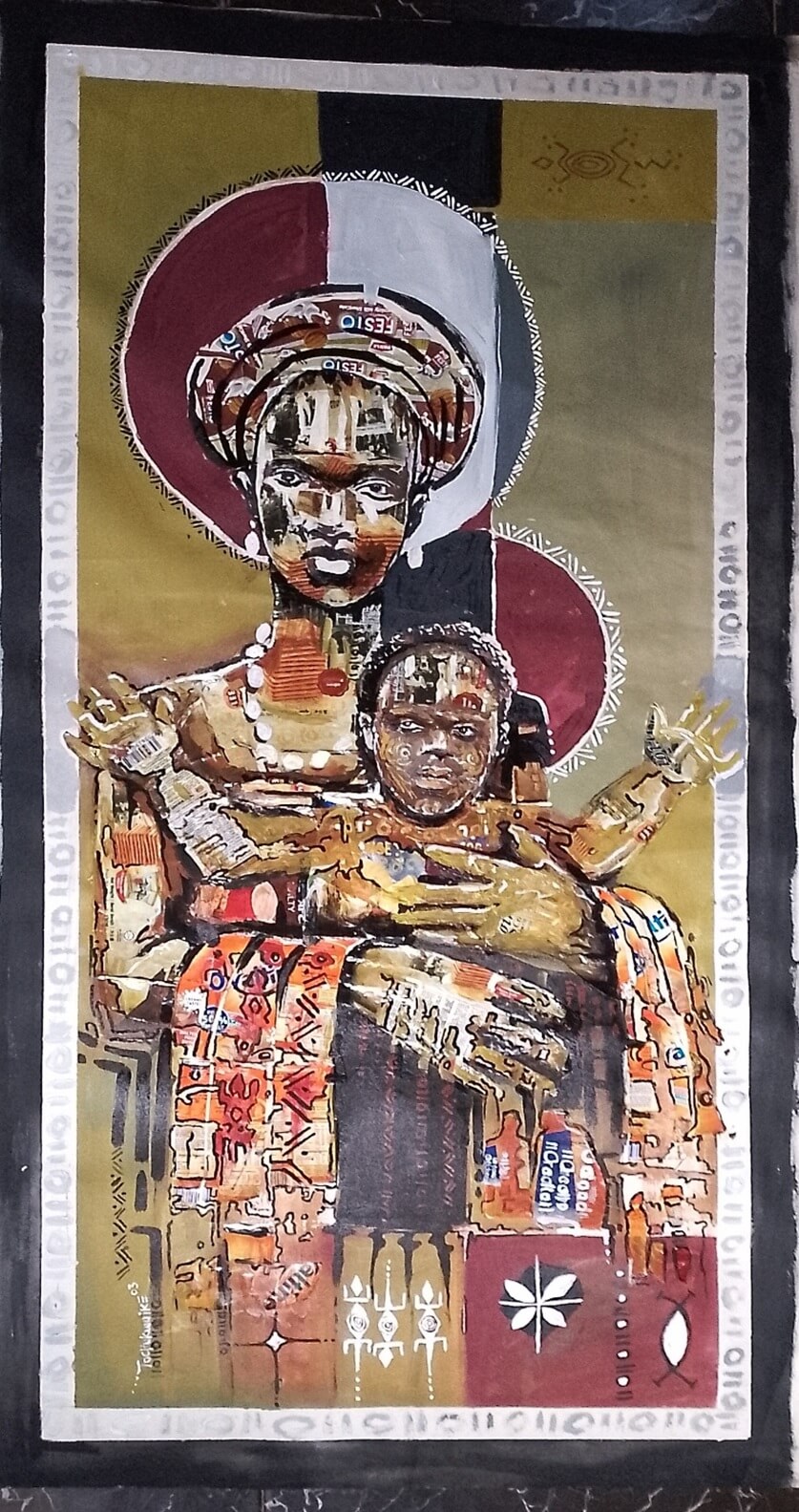
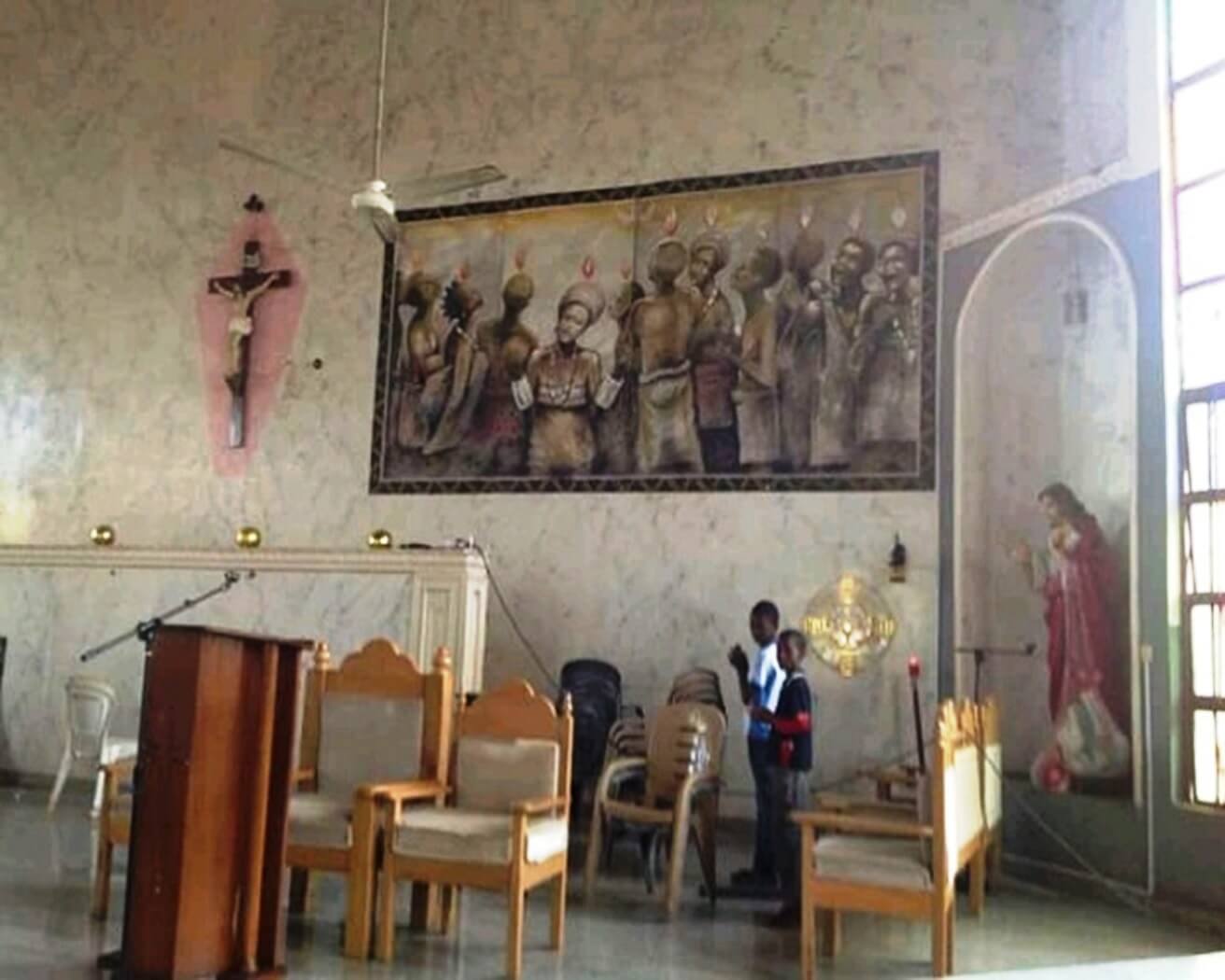
Art for Intercultural Dialogue is interested in how religious beliefs and understanding shape the society. Artists and Museum Education officers of National Museum of unity Enugu started retelling the gospel story from indigenous Igbo perspective. Such paintings can now be seen in major Churches and universities around Enugu